You have been quoted by eleven suppliers this month and three of them are lying. Not about the price — the price is usually real. They are lying about what they will actually ship once the sample is approved and nobody is watching the line any more.
The short version
Ask who signs the pre-production sample. Weigh the fabric when it lands. Check the handles for a bar-tack. Name the zip brand in the purchase order. Ask what they do not make. Every one of those is checkable by you, and none of them can be answered with a brochure.
1. Ask who signs the PP sample
The pre-production sample is the whole business. It is the bag made on the line that will run your order, in your fabric, with your hardware. Both sides sign it. It becomes the sealed sample, and it is the only thing you can hold a delivery against.
So ask a specific question: who physically signs it, and do I get a photograph of the signed tag. Nine times out of ten the answer tells you what you need. A factory names a person. An agent says the process is handled.
The trade-off is time. Insisting on a proper PP sample adds a cycle before bulk starts, and if your delivery date is already tight that is real. Skip it anyway and you have no grounds to reject anything, which costs more.
2. Weigh the fabric yourself
GSM is where orders get quietly cut, because the difference is invisible across a counter and obvious the first time someone loads the bag. This is the easiest lie in the trade to catch and almost nobody checks it.
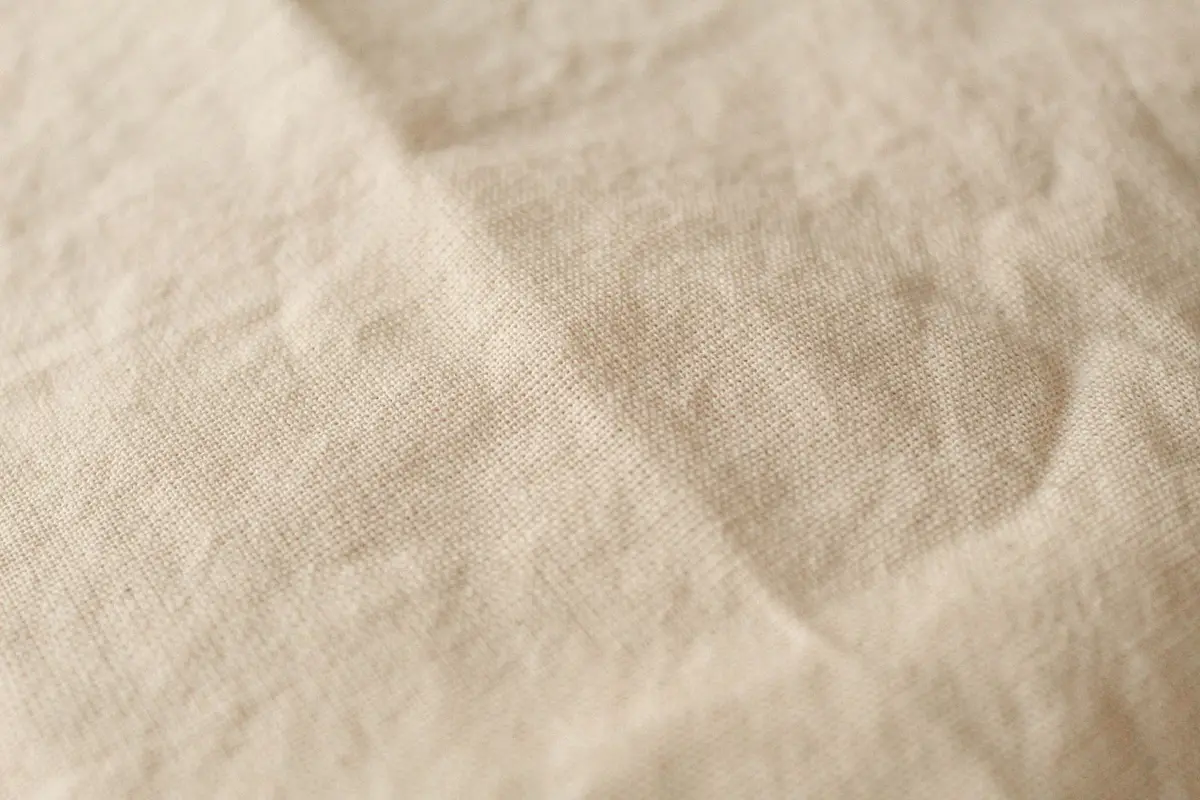
Cut a 10 cm by 10 cm square out of the delivered fabric. Weigh it in grams. Multiply by 100. That is your GSM. If you ordered 90 and the square weighs 0.75 g, you were shipped 75, and the difference went into somebody else’s margin.
Do it on the bulk, not the sample. The sample is nearly always correct. Substitution happens at the point where a hundred metres of fabric is being bought, not at the point where one bag is being made to impress you. The same arithmetic works in ounces for canvas — divide GSM by 33.9.
We would rather you did this to us. Put the number on the purchase order and weigh what arrives. The full detail per material is on our non-woven carry bag specification and cotton canvas tote page.
3. Look for the bar-tack
Nine out of ten handle failures on a tote are the same thing: no bar-tack. The handle is attached with a straight seam, the bag gets loaded to eight kilos, and the seam unzips from one end.
Turn the sample over and look at where the handle meets the body. You want a dense block of reverse stitching a few millimetres across, not a single line of straight stitch. It takes about four seconds per join on the machine. It is the difference between a bag that lasts two years and one that fails on the second use.
If a quote comes in noticeably under everyone else’s, this is one of the first places to look. It is invisible in a photograph and it is nearly free to leave out.
4. Name the zip in the purchase order
On any bag with a zip, the zip is what fails first. It is also the component most often swapped between sample and bulk, because the cost gap between a branded slider and an unbranded one is real and the visual difference is not.
Write the brand into the purchase order. Not “good quality zip” — the actual name. Do the same for buckles, sliders and any moulded part. A supplier who will not commit to a named component in writing has told you they intend to choose it later.
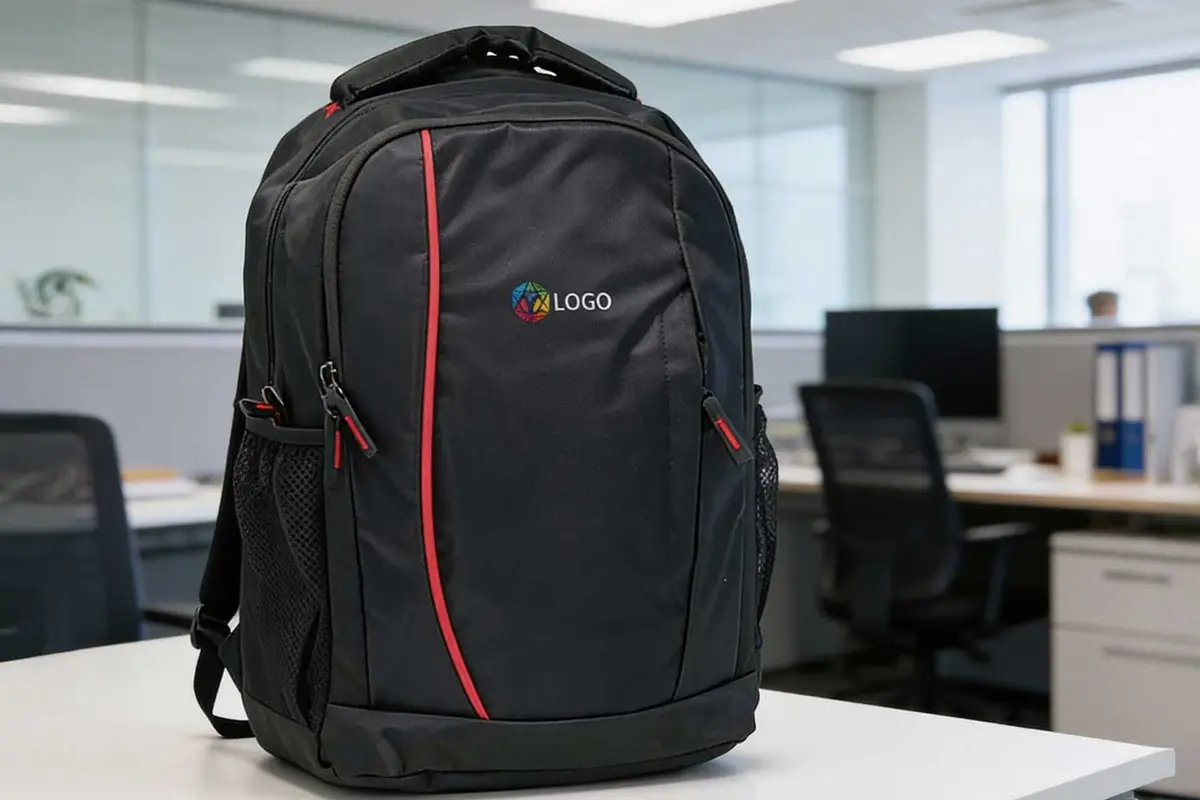
This matters most on structured bags, where hardware is a real share of the cost — see our laptop and office bag specification for what to name.
5. Ask what they do not make
This is the fastest question in the list and it separates a factory from a trading house in one answer.
A factory answers immediately, because the answer is decided by the machines on its floor. We do not do injection-moulded parts. We do not do certified thermal testing. We do not do rigid trolley shells. The list is short, specific, and given without hesitation.
A trading house says it can handle everything, because it is placing your order with somebody else and has no floor to be limited by. That is not automatically a problem — plenty of good orders run through agents. But you should know which one you are buying from, because it decides who you call when the bulk is wrong.
6. Check whether the MOQ is per design or per order
Two suppliers both quote a minimum of 100 pcs. One counts three colourways of the same bag as one design. The other counts them as three. The second supplier has tripled your minimum without changing the number they quoted you.
Ask it plainly: if I take this bag in navy, black and grey, is that one minimum or three. Then ask the same about sizes. A small and a large of one school bag should count together; a rider backpack and a boot tote should not, because they are different patterns.
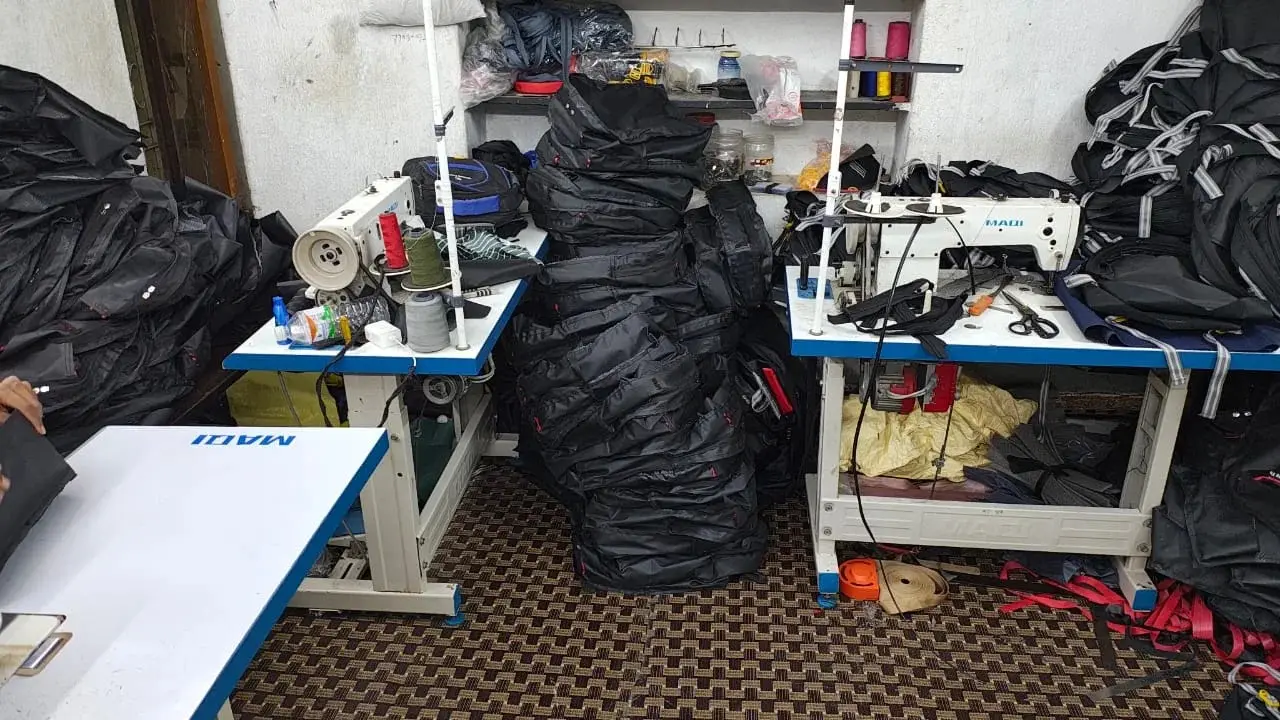
7. Find out whose floor it is
Ask for a video walkthrough of the floor, on a working day, with the machines running and unedited. A factory can send one within the hour, on a phone. It costs nothing and it is the single highest-yield request in this list.
What you are looking for is mundane: cut panels stacked by the tables, work in progress, people at machines. What you do not want is a photo set, a company profile PDF, or a scheduling problem that never quite resolves.
If a certification is part of your decision, verify it at the source rather than accepting a scan. Both OEKO-TEX and GOTS publish free certificate checkers — paste in the number and see whether it is live and what it actually covers. A certificate covering one fabric does not cover the factory, and that distinction is where most of the misrepresentation happens. For Indian product standards, the Bureau of Indian Standards is the reference.
The honest numbers
Our minimum is 100 pcs per design, and 50 pcs on leather because the per-piece cost is high enough that a hundred would price out most first orders. Colourways of one design count together. We have been making bags in Hyderabad for 15+ years.
On lead times and per-piece pricing: Verified lead times and price bands. I am not putting a number here I have not measured. A per-piece price with no MOQ, no spec and no Incoterm attached is meaningless anyway, and a lead time quoted without asking what the bag is should not be believed from anyone, including us. Send the spec and we will give you both against your actual order.
What I would do in your position
Shortlist three. Ask all three the same five questions: what do you not make, is the MOQ per design or per order, who signs the PP sample, what zip brand goes in the purchase order, and can I have an unedited video of the floor this week.
Then place a small first order with the one whose answers were most specific — not the cheapest. Weigh the fabric when it lands. Cut the square, use the scale, and compare it against what you wrote on the purchase order.
If it matches, you have found a supplier and the second order is easy. If it does not, you have learned it on a hundred pieces instead of ten thousand. That is the whole method, and it works on us as well as on everybody else. Our six product lines and their minimums are all published, including the trade-off on each.
Straight answers
What MOQ should a bag manufacturing company quote?
Ours is 100 pcs per design, and 50 pcs on leather because the unit cost is higher. What matters more than the number is whether it is per design or per order — three colourways of one bag should count together. A supplier who counts them separately has tripled your minimum without changing the figure they quoted you.
How do I check the GSM of a bag I was sent?
Cut a 10 cm by 10 cm square out of the delivered fabric, weigh it in grams on a kitchen scale, and multiply by 100. That is your GSM. Order 90 and weigh 0.75 g and you were shipped 75. Do it on the delivered bulk, not on the sample — the sample is almost always right.
What is a PP sample and why does it matter?
A pre-production sample is the bag made on the same line, in the same fabric, with the same hardware as your bulk run. Both sides sign it and it becomes the sealed sample. Without one you have nothing to reject against — every argument after delivery becomes your word against theirs.
How do I tell a manufacturer from a trading house?
Ask what they do not make. A factory has a short list and gives it immediately, because it is bounded by the machines on the floor. A trading house says it can do everything, because it is placing your order somewhere else and has no floor to be bounded by.
Do I need to visit the factory before ordering?
Not always, but ask for a video walkthrough of the floor on a working day, unedited, with the machines running. A factory can send that in an hour. If the answer is a photo set or a scheduling problem that never resolves, you have learned something without buying a flight.
What should be written into the purchase order?
GSM or ounce weight, denier where it applies, the zip and hardware brand, whether handles are bar-tacked, the lining, and the sealed sample reference. Anything you leave out is a decision you have handed to whoever is costing the job.